Best Artificial Turf for Dogs: What to Know
Artificial turf for dogs requires the right pile height, infill, and drainage. Learn what specs actually matter and how to keep it odor-free.
Dogs destroy natural grass fast. Between digging, urine burn patches, and constant foot traffic, a natural lawn in an active dog run looks rough within a single summer. Artificial turf holds up, but only if you spec it correctly from the start. The wrong infill or a drainage shortcut will leave you with a yard that smells like a kennel by August.
Here's what actually matters when you're installing turf with dogs in mind.
Turf Specs That Matter for Dogs
Not all artificial turf handles pet use equally. When you're comparing products, pay attention to these three specifications:
Face weight. Face weight is how heavy the turf fiber is, measured in ounces per square yard. For dogs, you want at least 50 oz/sq yd. Higher face weight means denser fiber, which means better durability under paws and less matting over time. Premium turf at $7.50/sq ft typically falls in the 60–80 oz/sq yd range. That's the right target for dogs.
Pile height. Shorter is better for dogs. A pile height of 1 to 1.5 inches is easier to clean, dries faster, and doesn't trap debris as easily as longer pile heights. Turf marketed as "landscape" with 2+ inch pile looks lush but becomes a maintenance headache in a dog area.
Perforations. Dog-specific turf products have a higher perforation density, meaning more drainage holes per square foot in the backing. Standard turf has about 12 holes per square foot; pet-grade products often have 40–80. This matters enormously for liquid drainage. Urine that pools on the surface creates odor; urine that drains quickly doesn't.
The Infill Question
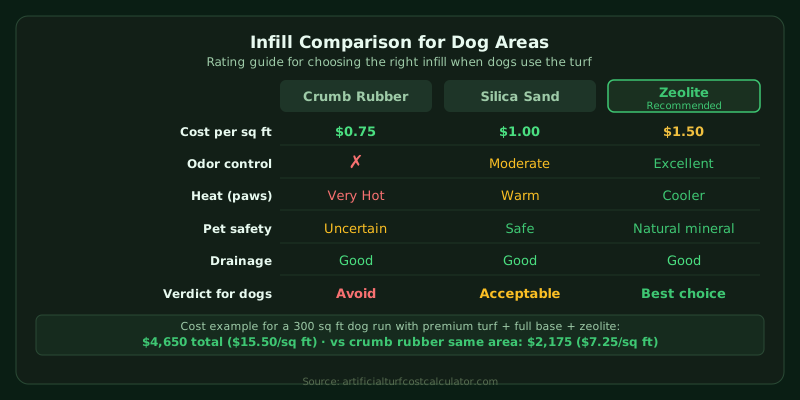
Infill choice is where most dog owners get it wrong. Crumb rubber at $0.75/sq ft is the cheapest option and a poor choice for pet areas: it retains heat and does nothing for odor. Silica sand at $1/sq ft is the standard residential choice but still doesn't address urine smell.
Zeolite infill at $1.50/sq ft is the right choice for dog yards. Zeolite is a naturally occurring mineral that absorbs ammonia, the compound in urine that creates persistent odor. It won't eliminate smell completely without rinsing, but it reduces it dramatically between cleanings. You can also mix zeolite with silica sand to balance cost: a 50/50 blend runs about $1.25/sq ft and works well for moderate pet use.
Here's a real cost example. A 300 sq ft dog run with premium turf, full base, and zeolite infill:
- Premium turf ($7.50/sq ft): $2,250
- Full base with drainage ($3/sq ft): $900
- Zeolite infill ($1.50/sq ft): $450
- Professional labor ($3.50/sq ft): $1,050
- Total: $4,650 ($15.50/sq ft)
Compare that to the same area with economy turf and crumb rubber: $3 + $0 + $0.75 + $3.50 = $7.25/sq ft, or $2,175 total. The premium setup costs $2,475 more, but it lasts significantly longer and doesn't smell. Use our artificial turf cost calculator to model both scenarios for your exact area.
Drainage: The Non-Negotiable
Urine drainage is the single most important design element for a dog turf installation. No infill choice compensates for poor drainage.
The turf backing needs to drain freely into a permeable base below. If you're installing over compacted clay or hardscape without a drainage layer, liquid will pool in the infill and you'll have persistent odor problems regardless of infill type.
For soil bases: Use a permeable crushed aggregate base (decomposed granite or class II road base) at least 3 inches deep. Don't use weed barrier fabric under the infill, since it blocks drainage. Use it between the soil and the aggregate layer only.
For concrete or hardscape: Add a drainage mat (also called a shock pad) between the concrete and the turf. These foam or plastic drainage layers allow liquid to flow laterally to drain points. They add $1–$2/sq ft to the project cost but are essential for good drainage on impermeable surfaces.
Slope also matters. A 1–2% grade away from structures lets liquid drain by gravity instead of pooling. If your area is completely flat, plan for a drain point at one end.
Odor Control: Ongoing Maintenance
Even with the right infill and drainage, a dog turf area needs regular maintenance to stay odor-free. Here's what actually works:
Rinse weekly. A thorough hose-down with plain water flushes ammonia compounds through the base. For most dogs, one 10-minute rinse per week keeps things fresh. Hot climates or multiple dogs may need more frequent rinsing.
Enzyme cleaners. Monthly treatment with an enzyme-based pet odor cleaner (diluted per label instructions and applied with a garden sprayer) breaks down organic compounds that rinse alone doesn't fully remove. Products like Simple Green Outdoor Odor Eliminator or Nature's Miracle Outdoor work well. Budget $15–$30 per treatment per 300 sq ft.
Solid waste. Pick up solid waste daily. Don't let it sit. The longer it sits, the more bacteria and odor compounds it deposits into the infill.
Annual infill top-up. Infill compacts and migrates over time. Add a partial zeolite refresh every 1–2 years, roughly $0.50/sq ft for a top-up treatment.
For a full maintenance schedule that covers all these tasks, see our artificial turf maintenance guide.
Heat Concerns for Dogs
Artificial turf gets hot in direct sun. Surface temperatures can reach 140–170°F on a 90°F day, well beyond what's comfortable for paw pads. This is less of an issue for dogs than many people fear, because dogs naturally avoid hot surfaces and will seek shade. But it's worth planning for.
Mitigations that actually work:
- Shade structures. A pergola, shade sail, or trees eliminate the heat problem entirely in shaded areas.
- Rinse before play. A quick hose-down drops turf surface temperature by 30–50°F for 20–30 minutes.
- Light-colored turf. Lighter greens and naturalistic color blends absorb less heat than deep solid greens.
- Zeolite and silica sand infill. Both retain less heat than crumb rubber.
Avoid scheduling outdoor dog time during the hottest part of the day (12–4pm in summer) if your turf area gets direct sun. Early morning and evening temperatures are safe.
Which Turf Products to Look For
You don't need a specific brand. You need the right specs. When asking suppliers about pet-grade turf, ask for:
- Face weight: 50 oz/sq yd minimum, 60+ preferred
- Pile height: 1–1.5 inches
- Drainage holes: 40+ per square foot (sometimes listed as "multi-hole backing" or "pet-perf")
- Blade shape: C-shape or S-shape blades recover better from compression than flat-blade products
Many suppliers offer "pet" or "k9" product lines. Compare specs against these numbers rather than taking the marketing description at face value.
Is the Extra Cost Worth It?
For a dedicated dog area, yes. The premium specs pay for themselves. Economy turf installed with standard infill in a dog run will need replacing in 5–7 years due to odor and matting. Premium pet-grade turf installed correctly with zeolite infill typically lasts 12–18 years in the same application.
Think of the extra $2,000–$3,000 on a 300 sq ft installation as buying 8–10 extra years of service life. That's a reasonable investment.
Try our free turf calculator to compare economy vs. premium setups for your exact square footage before you commit.
For a broader look at what goes into turf infill choices beyond pet use, see our infill types comparison.
Our cost data comes from industry sources and contractor interviews. Read more on our about page.
Related Articles
Artificial Turf Infill Types Compared
Crumb rubber, silica sand, and zeolite each cost differently and perform differently. Compare infill types by cost, heat, odor, and best use cases.
artificial turf
Artificial Turf Maintenance: What You Need
Artificial turf maintenance takes about 30 minutes a month. Learn the exact tasks, products, and schedule to keep synthetic grass looking great for 20+ years.
Artificial Turf Cost Calculator Team
We build free, accurate home improvement calculators grounded in real contractor pricing data.