Artificial Turf Maintenance: What You Need
Artificial turf maintenance takes about 30 minutes a month. Learn the exact tasks, products, and schedule to keep synthetic grass looking great for 20+ years.
One of the biggest selling points of artificial turf is low maintenance, and that claim is largely true. But "low maintenance" isn't the same as "no maintenance." Ignoring your turf leads to compacted infill, flattened blades, debris buildup, and odor problems that shorten the lifespan of a $10,000+ installation.
The good news: a proper maintenance routine takes about 30 minutes per month. Below is exactly what to do and when.
Monthly Tasks (Year-Round)
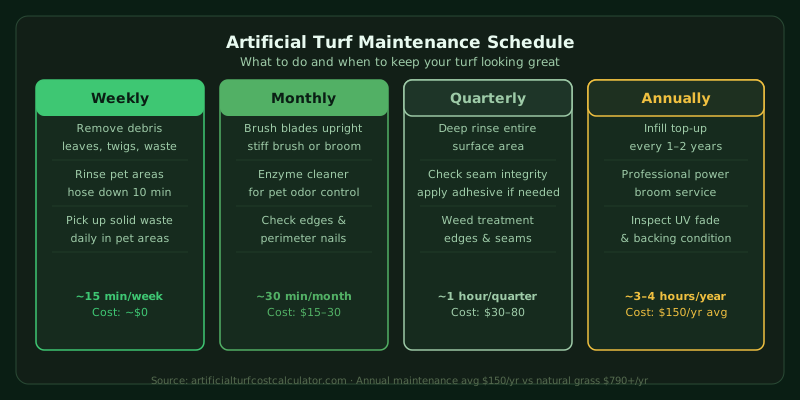
Brush the turf blades. Turf blades flatten over time from foot traffic, furniture weight, and UV exposure. A stiff-bristle push broom or power broom brushed against the grain (opposite to the direction the blades lean) lifts them back upright. This takes about 15–20 minutes for a 500 sq ft area.
Don't use a metal rake or wire bristle broom, since these can pull individual blades or damage the backing. A stiff synthetic bristle broom costs $15–$25 and lasts for years.
Remove debris. Leaves, twigs, seed pods, and other organic debris need to be removed before they decompose into the infill. Decomposed organic matter acidifies the infill, promotes weed seeds, and creates uneven surfaces. Blow debris out with a leaf blower or pick it up with a plastic rake. This is especially important in fall.
Rinse the surface. A light hose-down removes dust, pollen, and fine debris that blowing misses. About 5 minutes of rinsing per 500 sq ft. For pet areas, rinse more frequently: weekly is ideal.
Quarterly Tasks
Deep infill inspection. Get down and look at the infill level. You should see infill settled about halfway up the blade height, not flush with the top, but not so low that the blades all lean over either. Low spots where infill has migrated need a top-up.
Check perimeter edges. Tug gently on the edges every few months. If you feel any lifting, re-secure with additional nails or staples before it worsens. A lifted edge is an invitation for tripping and for wind to get underneath the turf.
Treat for weeds. Even with a weed barrier, weeds can sometimes establish at seams or edges. Spray a non-staining weed killer directly on any breakthrough weeds. Don't use soil-applied granular pre-emergents (they're designed for soil and do nothing on an impermeable base). A small pump sprayer and a $10 bottle of weed killer handle this quickly.
Annual Tasks
Infill top-up. Budget $0.25–$0.50/sq ft for an annual infill refresh on heavily used areas. A 500 sq ft lawn might need 250–400 lbs of silica sand added back after a year of use. Broadcast it with a drop spreader and brush it in with the grain, then brush against the grain to distribute evenly.
For pet areas using zeolite infill, a partial zeolite refresh (even just a 25% replacement over the full area) helps maintain odor absorption. Read more about your options in our infill types comparison.
Deep enzyme treatment. For any area that gets pet use, an annual application of enzyme-based cleaner handles the accumulated organic residue that regular rinsing doesn't fully reach. Dilute per product instructions, apply with a garden sprayer, let sit 30 minutes, then rinse thoroughly.
Check for seam integrity. Walk all seams and apply gentle lateral pressure. Any seam that shows separation needs adhesive attention before it opens further. A tube of seam adhesive and 30 minutes of repair now prevents a full re-seaming job later.
UV and blade assessment. After several years, look at the turf blades in direct sunlight. Some fading is normal. Significant discoloration, brittleness, or crumbling blades indicate UV degradation: a sign the turf is in the back half of its lifespan. Premium products with UV stabilizers (usually listed as "UV-resistant" or with specific additive branding) last longer before showing this. For expectations by product grade, see our artificial turf lifespan guide.
Specific Situations
After Heavy Rain
Heavy rain is actually great for your turf, since it flushes the infill and clears dust. Your only post-rain task is checking for standing water. If water is pooling more than 30 minutes after rain stops, you have a drainage problem: either the base has compacted and isn't draining, or debris is blocking the drainage holes in the backing.
A clogged backing can sometimes be cleared by power-washing from above with moderate pressure (under 1,500 PSI). If water still pools, the base may need professional attention.
After Heavy Foot Traffic Events
If you've hosted a party or had a lot of people on the turf, give it a thorough brushing afterward. Multiple people walking in the same paths create pressure lanes where blades flatten and infill compacts. A good brushing right after the event prevents those flat spots from setting.
In Winter
Artificial turf handles frost fine. You can walk on it when it's frosted without damage. Snow can be left to melt naturally or shoveled with a plastic snow shovel (not metal). Never use salt or sand on your turf, since both damage the infill and create a cleanup nightmare.
Fire Safety
Keep open flames and hot charcoal away from artificial turf. Most residential turf is not fire-rated. Sparks from a BBQ can melt blade tips, and a hot charcoal dropped directly on turf will burn through it. Place a protective mat under any outdoor cooking area near turf.
Maintenance Cost Summary
Below is a realistic annual maintenance budget for a 500 sq ft residential lawn:
| Task | Frequency | Annual Cost |
|---|---|---|
| Brushing | Monthly | $0 (broom you own) |
| Debris removal | Monthly | $0 |
| Rinsing | Monthly | ~$10 (water) |
| Weed treatment | Quarterly | $10–$20 |
| Infill top-up | Annual | $125–$200 |
| Enzyme treatment (pet area) | Annual | $30–$60 |
| Total | $165–$290 |
Compare that to natural grass annual maintenance costs of $800–$1,300 for the same area (mowing, water, fertilizer, weed control, aeration). The savings are significant.
What Voids a Turf Warranty
Most manufacturer warranties on residential turf run 8–15 years on the product and cover defects in manufacturing. They typically void if you:
- Use metal rakes or wire brooms that mechanically damage the backing or fibers
- Apply solvents, petroleum products, or harsh chemicals to the surface
- Allow fires or extreme heat sources near the turf
- Install turf without adequate drainage (sometimes verified during warranty claims)
- Allow standing water to remain for extended periods without addressing it
Keep your purchase receipt, the product specification sheet, and any installation documentation. Warranty claims are much smoother when you can demonstrate proper installation and maintenance.
Products Worth Buying
You don't need a cabinet full of specialized products. These basics cover everything:
- Stiff synthetic-bristle push broom ($15–$25): Your main maintenance tool
- Garden sprayer ($20–$30): For enzyme treatments and targeted weed control
- Enzyme pet odor cleaner ($15–$30 per treatment): Simple Green Outdoor or Nature's Miracle
- Weed killer ($10): Ready-to-use glyphosate or non-staining alternative
- Drop spreader ($40–$60, or borrow one): For infill top-ups
Total setup cost: $100–$145 for everything you need for years of maintenance.
If you're still planning your installation, estimate your turf cost and factor in these annual maintenance costs alongside your upfront investment for the full picture.
Related Articles

Best Artificial Turf for Dogs: What to Know
Artificial turf for dogs requires the right pile height, infill, and drainage. Learn what specs actually matter and how to keep it odor-free.
artificial turf
How Long Does Artificial Turf Last?
Artificial turf lasts 8–25 years depending on grade and installation quality. Learn what affects lifespan and how to get the most from your investment.
Artificial Turf Cost Calculator Team
We build free, accurate home improvement calculators grounded in real contractor pricing data.