Artificial Turf Infill Types Compared
Crumb rubber, silica sand, and zeolite each cost differently and perform differently. Compare infill types by cost, heat, odor, and best use cases.
Infill is the granular material brushed into your artificial turf after installation. It holds the blades upright, adds cushion underfoot, and (depending on the type) can either help or hurt your turf's performance over time. You can't swap infill easily once it's installed, so this decision matters.
The three most common options for residential installations are crumb rubber, silica sand, and zeolite. Here's a straight comparison.
What Infill Actually Does
Before comparing types, understand why infill is necessary at all. Artificial turf blades are attached to a flexible backing. Without weight holding them in place, they'd flop over in any direction. Infill provides:
- Ballast: The weight that keeps blades upright and the turf flat
- Cushion: Shock absorption for foot traffic, kids playing, and pets running
- Blade support: Keeps individual blades at the designed angle for the most realistic appearance
- Temperature regulation: Varies significantly by infill type (more on this below)
A properly infilled lawn uses about 1–2 lbs of infill per square foot. A 500 sq ft lawn requires 500–1,000 lbs of material, enough that the type and cost add up meaningfully.
Crumb Rubber: The Budget Option
Cost: $0.75/sq ft
Crumb rubber is made from recycled tires, shredded and granulated into small pieces roughly 0.5–1mm in diameter. It was the dominant infill material for sports fields for decades and remains the cheapest residential option.
Where crumb rubber works:
- Utility areas with no aesthetic concerns
- Sports applications where bounce and cushion matter more than looks
- Installations where budget is the primary constraint
Where crumb rubber falls short:
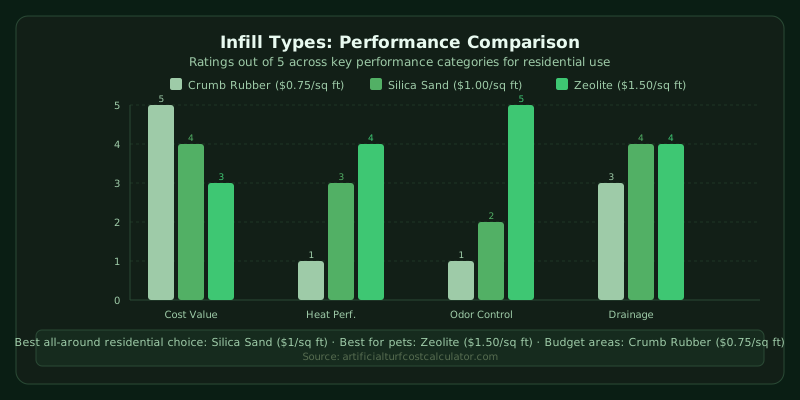
Heat. This is crumb rubber's biggest problem for residential use. Black rubber absorbs solar radiation and holds heat. Surface temperatures on crumb-rubber-infilled turf can reach 160–180°F in direct sun on a 90°F day: hot enough to burn bare feet in seconds. Silica sand and zeolite run 20–40°F cooler in the same conditions.
Odor. Rubber has a distinct smell, especially when it heats up. On a hot summer afternoon, a crumb rubber installation can smell noticeably like a tire shop. This off-gassing smell diminishes over years but never fully disappears.
Pet areas. Crumb rubber does nothing to address urine odor. For any area with dog use, it's the wrong choice.
Migration. Rubber granules track onto hard surfaces easily. After kids or pets come inside from a crumb rubber turf area, you'll often find black specks on floors, in shoes, and on furniture.
For a real cost example: a 400 sq ft utility side yard with economy turf and crumb rubber infill, DIY installed:
- Economy turf ($3 × 400): $1,200
- Basic base ($1.50 × 400): $600
- Crumb rubber ($0.75 × 400): $300
- DIY labor: $0
- Total: $2,100 ($5.25/sq ft)
Estimate your own project by adjusting these variables in our calculator.
Silica Sand: The Standard Choice
Cost: $1/sq ft
Silica sand is the most widely used residential infill, and for good reason. It's inert, stable, performs well aesthetically, and doesn't have the heat and odor problems of crumb rubber. The additional $0.25/sq ft over crumb rubber is a clear trade-up in performance.
Why silica sand works:
Heat performance. White or light-colored silica sand reflects more solar radiation than black crumb rubber. Surface temperatures are typically 20–40°F lower in direct sun. Still warm, but much more comfortable.
Clean and inert. Silica sand doesn't track, doesn't off-gas, and doesn't stain. It's the same material used in children's sandboxes (though finer grained). No odor, no residue.
Blade support. The angular grain of sharp silica sand grips turf blades effectively, keeping them at the designed angle. Round sand (beach sand) doesn't do this as well, so always specify "sharp silica sand" or "angular silica sand" when ordering.
Longevity. Silica sand compacts slowly and doesn't degrade over time. It's essentially permanent if not disturbed.
Where silica sand falls short:
For pet areas, silica sand provides no odor neutralization. Urine ammonia compounds accumulate in the infill over time and require regular rinsing to manage. A weekly rinse schedule keeps things acceptable; twice-weekly rinsing in summer keeps things fresh.
Zeolite: The Pet Area Premium
Cost: $1.50/sq ft
Zeolite is a naturally occurring mineral with a porous, honeycomb-like structure that absorbs and holds ammonia molecules. That's the specific chemistry that makes it valuable for pet areas: urine odor comes primarily from ammonia, and zeolite captures it at the source.
How zeolite works:
The mineral's surface area per gram is enormous (400–800 m² per gram for clinoptilolite, the most common turf-grade zeolite). This vast internal surface area acts like a molecular sponge for ammonia. When you rinse the turf, the absorbed ammonia flushes away and the zeolite's capacity partially regenerates.
Zeolite isn't perfect. It doesn't eliminate odor completely, and in a high-traffic dog area it can become saturated between rinses. But compared to silica sand or crumb rubber in the same application, it reduces odor significantly.
Other zeolite benefits:
- Similar heat performance to silica sand (cooler than crumb rubber)
- Inert and non-toxic (safe for dogs, kids, and bare feet)
- White to light gray color blends naturally with most turf products
Cost comparison on a 300 sq ft pet run:
| Infill type | Cost at $0.75–$1.50/sq ft | 10-year odor management cost |
|---|---|---|
| Crumb rubber | $225 | High (odor buildup) |
| Silica sand | $300 | Medium ($20–$30/month enzyme cleaner) |
| Zeolite | $450 | Lower ($10–$15/month enzyme cleaner) |
The $150 premium for zeolite over silica sand pays back in reduced cleaning product costs and, arguably, in the quality of life of actually being able to use your yard in summer without holding your nose.
Blended Infill: A Practical Middle Ground
Many installers offer a 50/50 blend of silica sand and zeolite. For a 300 sq ft pet area, this runs about $1.25/sq ft, splitting the cost difference while still delivering meaningful odor control. It's a reasonable choice for moderate pet use (1–2 dogs) when full zeolite feels like a premium too far.
You can also layer infill: silica sand as the base layer, with zeolite as the top-dress layer. This approach puts the odor-absorbing material at the surface where it's most needed, while the sand provides bulk and stability below.
What to Ask Your Supplier
When sourcing infill, ask:
- For silica sand: Is this angular (sharp) or round? (You want angular.)
- For zeolite: What's the mineral type? (Clinoptilolite is standard for turf applications.)
- For crumb rubber: Is this virgin rubber or recycled? (Either works; recycled is more common and fine for most applications.)
- Particle size: For residential turf, 0.5–1.0mm is the standard size range for all three types.
Making the Decision
| Factor | Crumb Rubber | Silica Sand | Zeolite |
|---|---|---|---|
| Cost/sq ft | $0.75 | $1.00 | $1.50 |
| Heat | Hottest | Moderate | Moderate |
| Odor (pet use) | Poor | Moderate | Good |
| Tracking | High | Low | Low |
| General residential | OK | Best | Overkill |
| Pet areas | Avoid | Acceptable | Best |
| Kids' play areas | Avoid | Best | Good |
For most residential lawns without pets: silica sand. For dog areas: zeolite or a sand/zeolite blend. For utility areas on a tight budget: crumb rubber is acceptable if you accept the heat and odor trade-offs.
For a closer look at how infill affects dog turf performance specifically, see our artificial turf for dogs guide.
For your ongoing maintenance needs regardless of infill type, our artificial turf maintenance guide covers what to do and when.
Get your instant estimate with the infill type that's right for your project.
Our cost data comes from installer surveys and current material pricing. See our about page for more on how we build these estimates.
Related Articles
Best Artificial Turf for Dogs: What to Know
Artificial turf for dogs requires the right pile height, infill, and drainage. Learn what specs actually matter and how to keep it odor-free.
artificial turf
Artificial Turf Maintenance: What You Need
Artificial turf maintenance takes about 30 minutes a month. Learn the exact tasks, products, and schedule to keep synthetic grass looking great for 20+ years.
Artificial Turf Cost Calculator Team
We build free, accurate home improvement calculators grounded in real contractor pricing data.