7 Ways to Save on Artificial Turf Costs
Cut your artificial turf installation costs without cutting corners. Seven proven strategies to reduce your budget while getting a quality result.
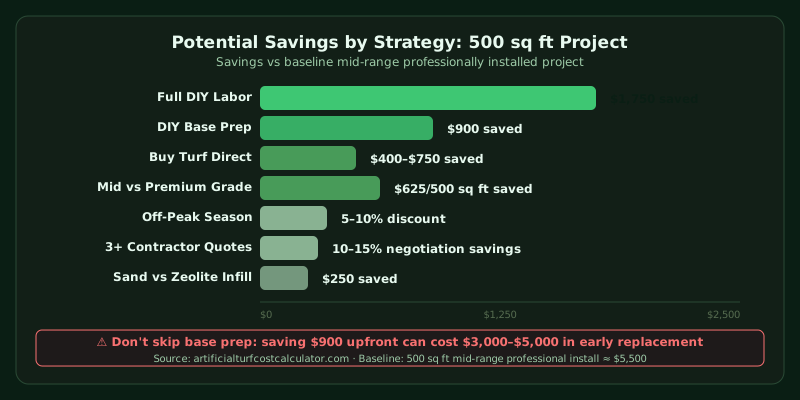
A 500 sq ft artificial turf installation can cost anywhere from $2,750 (DIY, economy turf, basic base) to over $9,000 (premium turf, full base, professional install). That's a huge range, and most of it is driven by choices you control, not fixed costs.
Here are seven strategies that actually work. None of them involve sacrificing quality in ways you'll regret.
1. Get at Least Three Quotes (And Use Them to Negotiate)
The single most effective thing you can do is get multiple quotes. Prices for identical jobs routinely vary by 25–40% between contractors in the same area.
Before you call anyone, estimate your project cost with the calculator. This gives you a baseline so you know what's reasonable and what's padded. When a contractor quotes 50% above your estimate, you can ask specifically why, and usually find out they're marking up the turf material significantly.
When you have three quotes, tell each contractor you're comparing bids. Most will sharpen their pencil. This alone can save $500–$2,000 on a mid-sized project.
2. Don't Over-Spec Your Turf Grade
Premium turf at $7.50/sq ft looks 20% better than mid-range at $5/sq ft. But mid-range also looks 80% better than real grass for most of the year, lasts 10–15 years, and saves you $1,250 on a 500 sq ft project.
The right question is: where will this turf be? A front-yard showpiece that everyone sees may justify premium. A backyard where kids play and the dog runs? Mid-range is the right call. A narrow side yard or utility strip? Economy works fine.
Use our cost calculator to see the exact dollar difference between grades for your specific area, then decide whether the visual upgrade justifies the cost.
3. Handle Base Prep Yourself If You Can
Professional base preparation costs $1.50–$3 per square foot in labor. On a 600 sq ft project, that's $900–$1,800. If you're reasonably fit and have a free weekend, you can do a basic base prep yourself for roughly $300–$500 in equipment rental and materials.
What it takes:
- Sod cutter rental: $150–$300/day
- Plate compactor rental: $75–$150/day
- Crushed aggregate: $30–$50 per ton (roughly 1.5 tons per 100 sq ft for 3-inch depth)
- Weed barrier: $0.25–$0.40/sq ft
The result: you install the base, a professional installs the turf. Many contractors will quote labor-only pricing if the base is already done to their spec. Confirm the base requirements in writing before you start.
Full excavation with significant grading is different. That usually requires equipment experience. But straightforward sod removal + aggregate + compaction is well within most homeowners' abilities.
4. Install in Off-Peak Season
Artificial turf contractors are busiest in spring and early summer. Installation demand drops in late fall and winter, when contractors are more willing to negotiate on price. Savings of 10–15% are realistic for the same scope of work booked in November vs April.
This doesn't work if you need it done before summer. But if timing is flexible, a fall or winter installation is worth asking about.
5. Reduce Infill Costs by Choosing Wisely for Your Use Case
Infill type matters, but match it to your actual needs rather than defaulting to the premium option.
- No infill: $0, but only appropriate for thin decorative applications. Not suitable for walkable areas.
- Crumb rubber: $0.75/sq ft, good cushion, fine for sports areas, but heat-retaining. Not ideal for pet areas.
- Silica sand: $1/sq ft, the right choice for most residential lawns without pets. Reliable and cost-effective.
- Zeolite: $1.50/sq ft, genuinely better for pet areas. Don't pay for it if you don't have pets.
On a 500 sq ft lawn, the difference between silica sand and zeolite is $250. If you have dogs, pay it. If you don't, save it.
6. Consider Partial DIY Installation
Full DIY installation is achievable on small, simple areas: typically under 300 sq ft with a single straight seam or no seams at all. The key equipment costs are the same tools as base prep plus a specialized turf cutter and a power broom for infill application.
The savings are real: $3.50/sq ft on a 300 sq ft area = $1,050 in labor avoided. The risk is seaming. A poorly done seam is obvious and can't be fixed without replacing the section. If your layout requires seams, seriously consider paying for professional installation on just that step.
Our DIY installation guide covers when it makes sense and what it realistically involves.
7. Buy Turf Direct From a Distributor
Many contractors add a 20–30% markup on the turf material they supply. You can often buy the same product directly from a regional distributor or manufacturer at closer to wholesale pricing, then have a contractor install it.
This requires:
- Finding a local synthetic turf distributor (search for "synthetic turf wholesale" + your city)
- Confirming the contractor will install customer-supplied material (many will, some won't)
- Getting the exact specification your contractor needs before ordering
The savings vary by market, but $0.50–$1.50/sq ft savings on the material are common. On a 600 sq ft project, that's $300–$900 back in your pocket.
What NOT to Cut
A few cost-reduction strategies sound appealing but routinely lead to expensive consequences:
Don't skip base preparation. The $750–$1,500 you save upfront costs $3,000+ in premature replacement. See our base prep guide for the full math.
Don't hire the cheapest contractor without checking references. Low bids often mean shortcuts on base prep, inferior seaming technique, or cheap materials. Ask for three recent local references and call them.
Don't buy the absolute cheapest turf for high-traffic areas. Economy turf in a play area or pet run will look bad within 3–4 years. Match the turf grade to the application, not just to the price point.
Putting It Together: A Realistic Budget Example
A well-priced 500 sq ft backyard installation with mid-range turf, basic base prep, silica sand infill, and professional installation:
Using the artificial turf cost calculator:
- 500 × ($5.00 turf + $1.50 base + $1.00 infill + $3.50 labor) = $5,500 baseline
With smart shopping:
- 3 quotes + negotiation: save $500–$800
- Off-season timing: save $400–$700
- DIY base prep: save $750
- Realistic total: $3,250–$3,850
That's 30–40% below the baseline estimate, achieved without compromising the quality of the finished installation.
Related Articles
How Much Does Artificial Turf Cost in 2026?
Artificial turf cost ranges from $3 to $12+ per sq ft installed. Get real numbers, breakdown by material and labor, and estimate your project cost.
artificial turf
How to Install Artificial Turf: DIY Guide
Installing artificial turf yourself saves $3.50/sq ft in labor. Learn the step-by-step DIY process, tools needed, and what to watch out for.
Artificial Turf Cost Calculator Team
We build free, accurate home improvement calculators grounded in real contractor pricing data.