How Long Does Artificial Turf Last?
Artificial turf lasts 8–25 years depending on grade and installation quality. Learn what affects lifespan and how to get the most from your investment.
The honest answer to "how long does artificial turf last?" depends almost entirely on two things: the quality of the turf you bought and the quality of the base underneath it. Get both right and you'll replace it once in 20 years. Cut corners on either and you could be looking at replacement in five.
Below is what the numbers actually mean and how to make sure your installation reaches its full potential lifespan.
Lifespan by Turf Grade
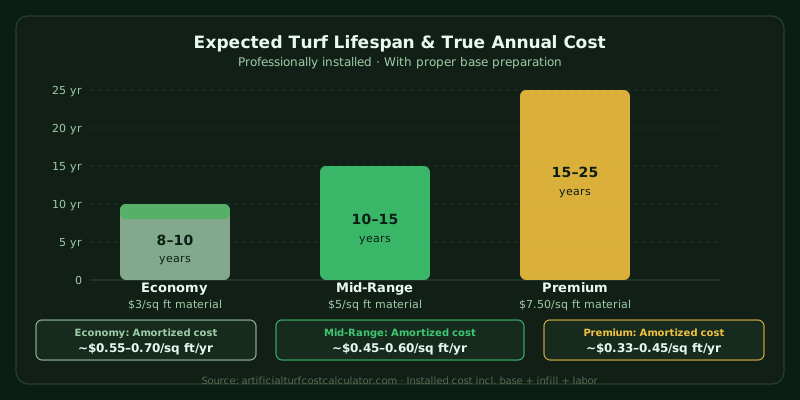
Economy turf ($3/sq ft) is made from lower-density fiber with shorter pile heights (typically 25–30mm). The polyethylene or polypropylene fibers break down faster under UV exposure and foot traffic. Expect 8–10 years of normal residential use. In high-traffic areas like pet runs or kids' play zones, that drops to 5–7 years in the worn patches.
Mid-range turf ($5/sq ft) uses higher-quality polyethylene fibers, better UV stabilization, and heavier face weight (typically 50–65 oz per square yard). The backing is tougher. Well-installed mid-range turf routinely lasts 12–15 years with normal care. Most manufacturers back it with a 10-year warranty.
Premium turf ($7.50/sq ft) uses the highest face weights (65–90 oz), dual-color or multi-color blade designs, and superior UV stabilizers. These products hold their color and shape significantly longer. The 15-year manufacturer warranties are backed by real engineering, not marketing. Premium turf can realistically last 18–20+ years in a low-traffic residential setting.
You can estimate your total cost by turf grade to see how each tier affects your budget.
The Real Lifespan Killer: Poor Base Preparation
The number one cause of premature turf failure isn't the turf itself. It's what's underneath it. Poor base preparation causes:
- Water pooling under the backing, which leads to mold, backing delamination, and seam failure
- Uneven settling that creates low spots and visible wrinkles
- Weed root penetration through the backing over time
- Instability that accelerates wear at seam lines and edges
A premium turf product installed over an inadequate base will fail faster than economy turf installed correctly. The base preparation decision is the single most important choice in any turf installation.
Factors That Extend Turf Life
Regular brushing: dragging a stiff-bristled brush or power broom across the pile keeps blades upright and prevents matting. Matted blades don't recover once they've been compressed for long periods. Monthly brushing in high-traffic areas, quarterly everywhere else.
Prompt stain removal. Most stains rinse out easily with water if caught early. Oil-based stains (sunscreen, BBQ grease) need a mild detergent. Leaving organic material (leaves, pet waste) sitting on the surface accelerates fiber degradation.
Adequate infill maintenance. Infill (crumb rubber, silica sand, or zeolite) settles over time and needs to be topped up every 2–3 years. Without sufficient infill, blades lose their upright position and flatten permanently. See our infill comparison guide for which type holds up best.
Shade vs sun exposure. Turf in full sun degrades faster due to UV exposure. UV-stabilized products are rated for full-sun exposure; cheaper products may not be. Check the UV rating before purchasing.
Temperature extremes. Artificial turf can get very hot in direct sunlight (more on that in a separate article). While heat doesn't directly shorten fiber lifespan, it does accelerate the curing of the infill and backing adhesives if repeated cooling cycles are extreme.
What Warranties Actually Cover
A 10-year or 15-year manufacturer warranty sounds impressive, but read the fine print. Most cover:
- UV color fading beyond a certain percentage (typically 10–15%)
- Seam separation (usually only if professionally installed)
- Backing delamination from manufacturing defects
Most warranties explicitly exclude:
- Damage from pets
- Heavy equipment on the surface
- Improper installation or base preparation
- Chemical damage from non-approved cleaners
- Normal wear from foot traffic
The warranty is a quality indicator, not a guarantee of a specific lifespan. A 15-year warranty installed over bad base prep will still fail early, and the claim will be denied.
Real Cost-Per-Year Comparison
Looking at this through a cost-per-year lens changes the math significantly.
Economy turf, 500 sq ft, no professional install:
Using the artificial turf cost calculator:
- 500 × ($3 turf + $1.50 basic base + $1 silica sand, DIY) = $2,750
- Lifespan: 8 years
- Cost per year: $344/year
Mid-range turf, 500 sq ft, professional install:
- 500 × ($5 + $1.50 + $1 + $3.50 labor) = $5,500
- Lifespan: 13 years
- Cost per year: $423/year
Premium turf, 500 sq ft, professional install + full base:
- 500 × ($7.50 + $3 + $1.50 + $3.50) = $7,750
- Lifespan: 18 years
- Cost per year: $431/year
The premium option costs the most upfront but delivers the lowest long-term cost per year, and you get a better-looking product the entire time.
Signs Your Turf Is Aging
Watch for these indicators that your turf is approaching end of life:
- Significant pile flattening that doesn't recover after brushing
- Color fading or bleaching in sun-exposed areas
- Seam lines becoming visible or edges pulling away
- Backing tearing when the turf is flexed
- Persistent odor that cleaning doesn't resolve (often a backing issue)
Minor issues like localized flattening or small stains can often be repaired. Major backing damage, widespread color loss, or systemic seam failure means replacement is more cost-effective than repair.
Making the Right Grade Decision
The right turf grade depends on your use case:
- Low traffic, decorative only (small patio, strip): Economy is fine
- Normal residential lawn with occasional foot traffic: Mid-range
- Family backyard with kids and regular use: Mid-range to premium
- Pet area with multiple dogs: Mid-range with zeolite infill (see our pet turf guide)
- Sports field or commercial application: Premium only
Factor in the base preparation cost when making this decision. The total installed cost for a premium product is typically 40–60% more than economy, but it lasts twice as long and looks significantly better throughout its life.
Related Articles
Artificial Turf vs Real Grass: 10-Year Cost
Artificial turf costs more upfront but natural grass expenses add up fast. See the real 10-year cost comparison with specific numbers.
artificial turf
Why Base Prep Makes or Breaks Your Turf
Poor base preparation causes 80% of artificial turf failures. Learn what a proper base costs, what materials to use, and what happens when you skip it.
Artificial Turf Cost Calculator Team
We build free, accurate home improvement calculators grounded in real contractor pricing data.